 Client Portal
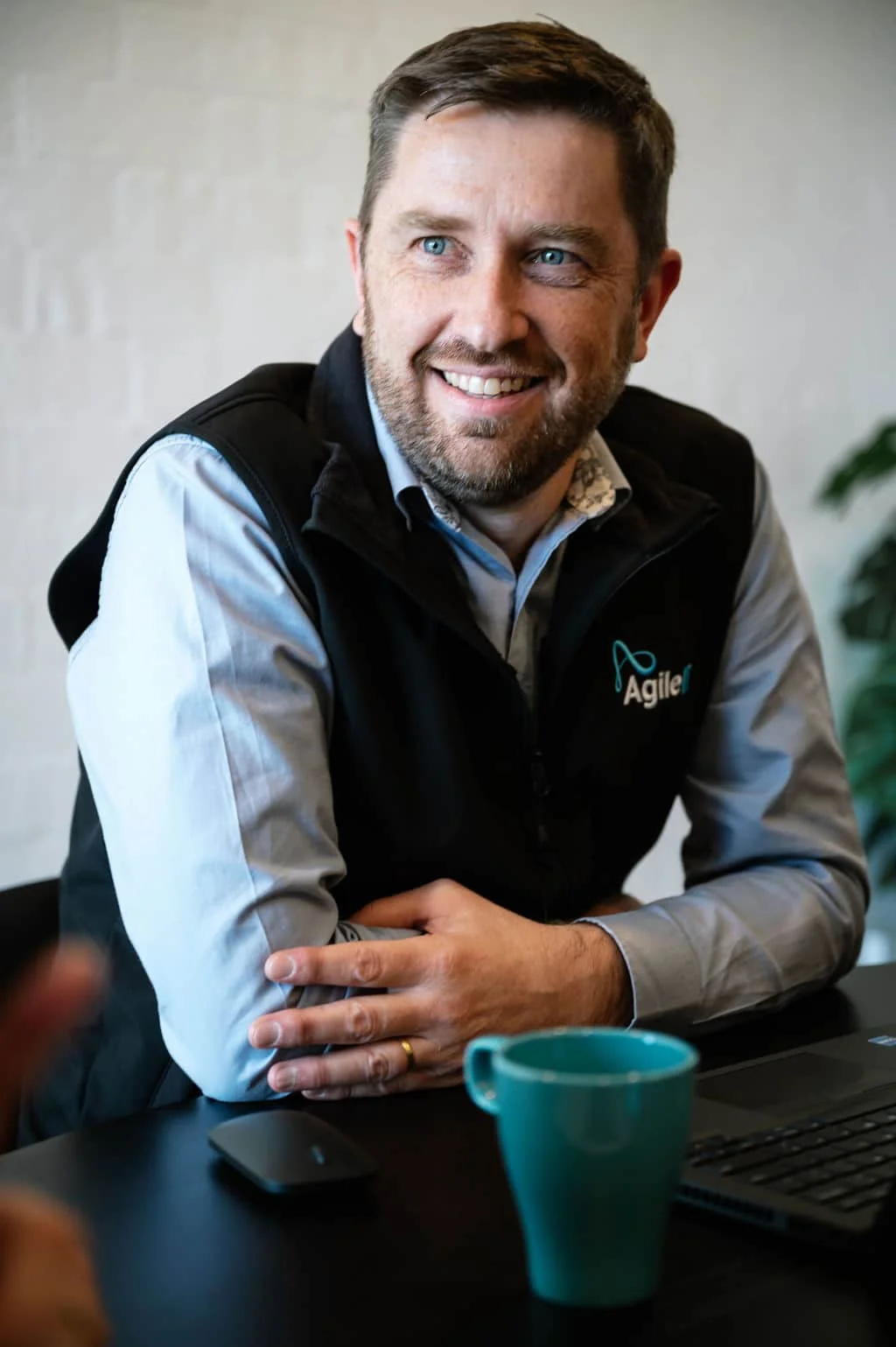
Author
Managing Director, Agile IT Solutions. Helping Australian SMBs run technology deliberately since 2007.
When a business owner reaches out for the first time, the most common question, usually unspoken, is "what am I actually agreeing to here?" Most expect a sales call. Some have been through a discovery process before and remember it being either a high-pressure pitch or a one-sided fact-find with no clear outcome.
This is what an Agile IT discovery conversation actually looks like. It is the same conversation whether we meet at your office or on Microsoft Teams. It is structured, time-boxed, free of charge, and ends with you in control of the next step.
Two formats, same conversation
We run discovery conversations two ways:
- On-site at your office. Better if you have an established environment you would like us to see, if you want us to meet others on your team, or if you simply prefer face-to-face.
- Via Microsoft Teams. Quicker to schedule, no travel either way, and works well for an initial conversation when you are remote-first or just doing first-round vetting.
The structure, the themes, and the time taken are the same. Only the room changes. Pick whichever suits the way you work.
Before the conversation
You do not need to prepare anything. No brief, no pre-read, no spreadsheet of pain points. The job of the conversation is to surface those, not to require them up-front.
On our side, we do about 15 minutes of preparation. We look at your website, your LinkedIn, anything public about how the business operates. We arrive with questions, not a deck. There will be no PowerPoint.
An agenda is sent in advance so both sides know what to expect, including the time we will spend on each theme. Setting that out up-front is how we keep the conversation focused without it feeling like an interview.
The conversation: five themes
The full discovery runs 45 to 60 minutes. Inside that window we work through five themes deliberately.
1. Your expectations
What brought you to this conversation. What outcome would make this an obvious "yes". What has been frustrating in your current IT arrangement, and what would good look like. The first part of the conversation is about your view, not ours.
2. Business needs and strategy
Where the business is going over the next 12 to 24 months. Headcount changes, new locations, product or service evolution, ownership change, anything that affects what technology will need to do. We ask about strategy because technology should serve it, not the other way around.
3. AI
How is your team using AI today, both the sanctioned tools and the unsanctioned ones. What is your stance on the technology. What are you worried about. Where do you see it making a difference for your team in the next year. AI moved from "future topic" to "today topic" so we treat it as a core discovery theme, not an afterthought.
4. Security and compliance
What kind of data you handle (client information, financial records, regulated data). Who you are accountable to (regulators, insurers, large clients with security audits). Whether you align to a framework like SMB1001 or the ASD Essential Eight, or whether that is an open question. What is already in place. Where you have been worried but not yet acted.
5. Budget
What you spend on IT today, end to end, helpdesk, software, hardware, telephony, internet, security tooling, all of it. What you are prepared to invest if the right service was in place. What you would want from the spend. We talk about budget early on, not at the end, because the answer shapes which engagement model fits.
How we keep to time
The five themes are non-negotiable on time. If a theme needs more than its allocated window, we flag it and propose a deeper session rather than burning through the rest of the meeting and finishing the conversation without the budget topic, which is the most common discovery mistake.
The aim is to finish on time, having covered all five themes at the depth needed to make a fit call, and to leave you in control of the next step rather than booked into a follow-up you did not sign off on.
Things that help us stay on time:
- A written agenda sent in advance
- No deck, talking is faster than presenting
- A note-taker on our side so the conversation flows uninterrupted
- A clear close at 45 minutes if we are on Teams, with the option to extend 15 minutes if both sides have value to add
What we cover at the end
In the last few minutes we do three things:
- Reflect back what we heard, partly to confirm understanding, partly so you hear it summarised back as a check on the picture forming
- Give you our honest read on fit, are we likely to be the right partner, or is there someone better suited? We say it both ways
- Propose a next step, usually one of three: a deeper site visit, a written proposal, or a friendly handover if we are not the right fit
When one conversation is not enough
Sometimes the discovery surfaces enough that a single 60-minute conversation is not enough to scope a meaningful proposal. If both sides want to keep going, the next step is typically a deeper site visit:
- Two to three hours, on-site
- A walk-through of current systems and infrastructure
- Conversation with a wider group on your team, the people who use IT every day, the person responsible for compliance, the person managing the budget
- A review of current configurations, vendor agreements, and what already works well
The deeper visit is still part of the discovery process. There is no commercial commitment yet, no charge for the time, and no expectation. To give you a meaningful proposal we need to understand the configuration of the environment, not just the business that runs on it.
What you walk away with
By the end of the initial conversation, regardless of which format we used:
- A clear picture of what an engagement with Agile IT would look like
- An honest read on whether we are the right fit for your business
- A defined next step, your choice to take it or not
- No quote yet. Quotes come after we know enough to give you one with confidence
The conversation costs you nothing but the time. We deliberately keep the format the same whether you are a 10-person practice on the Peninsula or a 40-person professional services firm in the city. The point of discovery is to find out whether we should be working together at all. Everything that follows depends on getting that answer right.
The takeaway: an Agile IT discovery conversation is structured, time-boxed, and free of charge. The job is to find out, for both of us, whether we should be working together.