 Client Portal
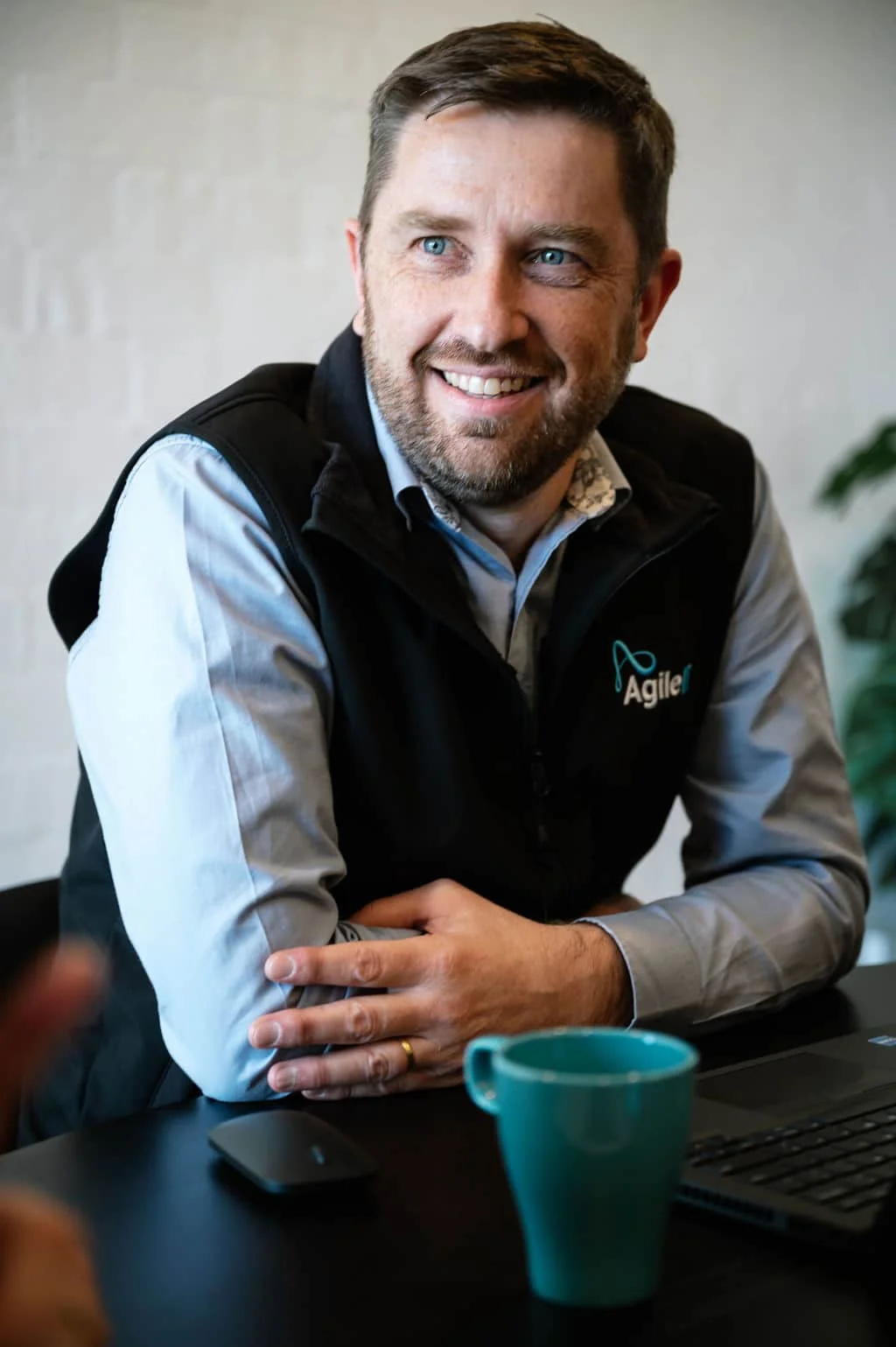
Author
Managing Director, Agile IT Solutions. Helping Australian SMBs run technology deliberately since 2007.
Most managed IT businesses hit the same wall around the 15 to 25-person mark. The technical work is being done well. Clients are happy. The pipeline is healthy. And yet the leadership team is running flat out, the back-office processes are creaking, and every new hire is taking longer to find and longer to train than the last one.
The bottleneck is rarely technical. It is operational. The systems, processes and discipline that worked at 10 people start to fail at 20, and the things that get you to 30 are different again. Doing that work, while still doing the day job, is the part most MSPs struggle with.
This is why Agile IT works with Dijital Team, and it is also why we put real effort into their Better Business Pathway program.
What Dijital Team does for our team
Dijital Team is a Sri Lanka-based partner that helps Australian managed IT businesses build dedicated, offshore technical teams. The model is simple: we tell them the roles we need, they handle recruitment, training, HR and the day-to-day operational management. The people they build into our operation work the same hours, against the same documentation, with the same tools as the rest of the Agile IT team.
What that gives Agile IT, practically:
- Capacity that scales with demand, without the long, expensive cycle of hiring locally for every new role
- Access to specialist skills in areas where the Australian market is thin, particularly around development, specialised infrastructure, and dedicated service-desk roles
- Continuity of service, because the people we add through Dijital Team stay with us, rather than turning over the way short-term contract teams often do
What it gives our clients is simpler: a service that does not slow down when the business is busy, and a team behind the work that is not stretched past the point where things start to slip.
The Better Business Pathway
Dijital Team runs a program called the Better Business Pathway, which is the part that really changes how we operate. The honest framing they put on it is that the issue for most MSPs is not technical capability, it is business capability: the underlying machinery of how the business is run.
The program addresses five operational areas:
- Service operations, the systems and discipline behind delivery
- Finance operations, the margin and pricing structures that decide whether the business is truly sustainable
- People operations, the hiring, retention and performance practice that decides whether the team is the right shape for the work
- Sales and marketing operations, the predictable acquisition of the right kind of new client
- Go-to-market operations, the work of building and launching new service offerings without disrupting the existing book
For Agile IT, this is a structured way to look at how we run, with outside coaches and frameworks tested across many similar businesses. The point is not to copy what other MSPs do. It is to bring an outside eye to where we sit today, identify the gaps that are easy to miss when you are inside the business every day, and work through them deliberately rather than reactively.
What that means for our clients
The benefit of any internal improvement program lands with clients or it does not land at all. The concrete things our clients, from planning practices in Brighton to trades businesses in Pakenham, have seen as we have gone deeper into the Pathway:
- Faster issue resolution times, because the service-desk processes behind every ticket have been audited and tightened
- More structured strategic conversations, with quarterly business reviews documented and followed up, not treated as one-off events
- Predictable cost, because the way we cost and price service has been examined in detail, with the savings passed through where they should be
- A team that can keep up, because the people operations work means fewer roles sit vacant and fewer talented people leave
None of these is dramatic in isolation. The compound effect, over a year or two, is the difference between a managed IT partner that is growing in the right direction and one that is getting stuck.
Why we share this publicly
It is unusual for a managed IT business to talk openly about the operational work behind the scenes. The convention is to put up a polished surface and trust that the work is implied. We take a different view.
If you are a business owner choosing a managed IT partner, the question that matters is not just whether the technical work is good. It is whether the business behind the technical work is run well enough to keep delivering it consistently, year on year, as your needs change. Knowing that Agile IT works with Dijital Team on both the team and the operational side is part of the answer to that question.
The deeper view of how Dijital Team operates, and what the Better Business Pathway covers, is on their own Better Business Pathway article. It is the kind of work that does not feature in most MSP marketing, but the kind of work that decides whether the service your business actually receives is sustainable.
One related thread worth flagging, also from Dijital Team, is their view of the SMB1001 cyber security standard as a shift in how MSPs can serve clients. Their SMB1001 opportunity piece argues that the framework moves the conversation from reactive support to proactive risk management, and that the MSPs investing early in understanding it will be the ones best placed to help Australian SMBs work through the compliance question that is increasingly on the table. AgileSECURE is aligned to SMB1001 for exactly that reason.
The takeaway: the operational discipline behind a managed IT business is the part that decides whether the service is sustainable. Dijital Team and the Better Business Pathway are how Agile IT keeps that discipline honest.