 Client Portal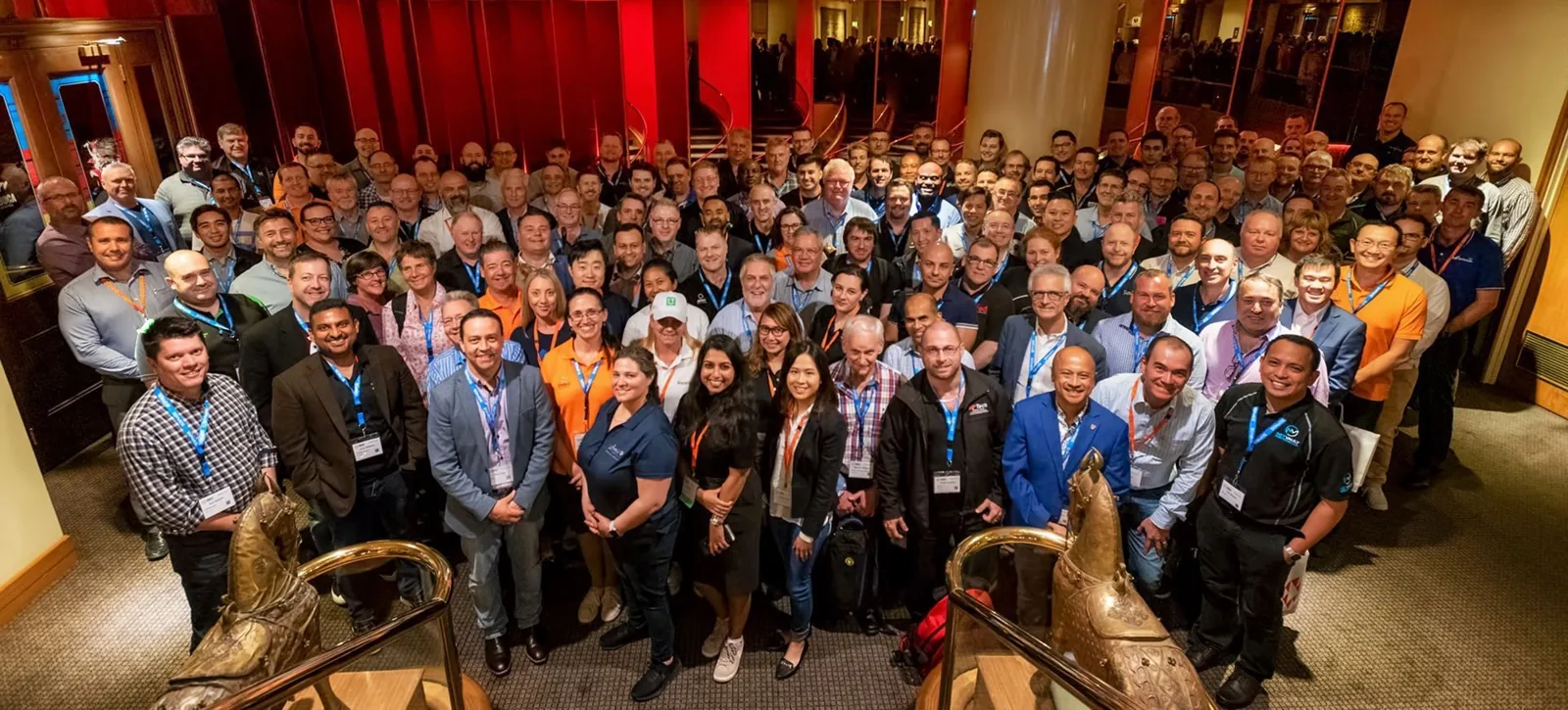

We have been a founding member of SMBiT Professionals since 2010, and have spoken from that stage before, so we go every year less as spectators and more as part of the furniture. This year the venue was the Western Sydney Convention Centre, and the theme was Next Level. It is a long way from our office in Mornington, and worth the trip.
Conferences like this are easy to dismiss as an industry talking to itself. This one was not. Almost everything discussed lands on the desk of any Australian business owner running between five and a hundred staff, because the pressures on us are the same pressures on you. Here is what we took away, and what we think it means for your business.
1. The economy is slowing, not going backwards. The difference matters.
The opening keynote came from Dr Sherman Chan, Chief Economist at the Australian Property Institute, who spends most of her time in front of property audiences and made one point three times because the media keeps getting it wrong. Australian GDP grew 0.3% last quarter. To hit the long term average of around 2.6% a year, you need roughly 0.6 to 0.7% a quarter. So we are growing at about half our usual pace.
That is a slowdown. It is not a contraction. You are still walking forward, just more slowly. She was pointed about the difference, because fear is self fulfilling. If everyone stops spending because they read the word downturn, we manufacture one out of nothing.
The number that genuinely should worry us is productivity, which has fallen around 7% from its peak. That is the real drag on the economy, and it is the one thing a business can actually do something about. Meanwhile the Reserve Bank does not expect inflation back inside its target band until the second half of 2027, and wage growth has just crossed back below inflation, so cost of living pressure is returning.
Plan for a tight couple of years, and make sure every dollar you spend comes back as time saved or cost avoided.
What it means for you. That last line is the whole game for the next while. Which brings us neatly to the next point.
2. When money is tight, people do not stop spending. They start asking better questions.
Dr Chan's advice to our industry was blunt, and we are taking it on the chin. Stop selling capability and start quantifying outcomes. Do not tell a client their team will love the new system. Tell them how many hours a week it gives back and what those hours are worth.
She also pulled Australian Bureau of Statistics data on what actually blocks businesses from adopting technology. For small businesses, the number one barrier is not cost. It is insufficient in-house skills or capability. For medium businesses it is uncertainty about the cost and the benefit.
Neither of those is a technology problem. Both are communication problems, and they belong to providers like us. If your IT provider cannot explain in plain numbers why something is worth doing, that is a reasonable thing to push back on. It is the same argument we make about judging technology on total cost, not the sticker price, in reactive IT being a cost deferral rather than a saving.
3. AI has stopped being a talking point and started showing up in the numbers.
This was the biggest shift from previous years. Nobody stood up and speculated about the future. Operators stood up and showed what they had built and what it had cost.
One IT firm on the Gold Coast reported first response times on support tickets down by 80% and resolution times down by 90% after building AI tooling over their existing systems. Another shared his actual spend, $700 a month today, forecast to be $2,000 within six months, and made the point that AI is currently priced below cost because the vendors are competing for market share. That will not last.
Two cautions came through just as clearly. The first is that AI should be treated as an insider threat, because you give it access to your data and then you trust it. One presenter showed his accounting software confidently reporting that his business took 119 days to collect an invoice, when the correct figure, on the same screen, was 24. If you are making decisions on numbers an AI generated, check them.
The second is that most businesses are already using AI whether they know it or not. Staff use whatever is on their phone. If you have not written down what is acceptable, you have not stopped it happening, you have just stopped hearing about it. An acceptable use policy is a one page document and it is the cheapest risk reduction available to most businesses right now, which is exactly why we keep banging on about governing your team's AI use.
You cannot automate a process that only exists in somebody's head.
What it means for you. The productivity gains are real, but they land on organisations that have their processes sorted first. Automation amplifies a good process, and it multiplies the mess of a bad one.
4. Nobody checks your IT provider's work. That is starting to change.
The industry professionalism panel was uncomfortable listening for everybody in the room, and it should be reassuring for you. The point made was that this industry has no barrier to entry. Anyone can register a business name and start calling themselves an IT professional or, increasingly, a virtual chief information security officer.
The proposal with the most support was mandatory professional indemnity and cyber insurance for anyone selling technical or cyber security services. The logic is neat. Insurers are exceptionally good at assessing risk, so they would weed out the worst operators faster than any regulator could. There is also a federal cyber security professionalisation scheme already underway, which has moved from whether to do it to how.
The panel expected requirements to arrive through the supply chain rather than by direct regulation. Large organisations impose standards on their medium suppliers, who impose them on their small suppliers. If you sell to anyone larger than you, this will reach you.
Anyone claiming to be a specialist in everything is a specialist in nothing.
What it means for you. Two fair questions to ask any provider, including us. What professional indemnity and cyber insurance cover do you carry, and what specifically are you expert in, as opposed to what you resell.
5. In most small businesses, the owner is the ceiling.
The second day barely mentioned technology and was the more valuable of the two.
In her session on the growth ceiling, management consultant Sarah Williams walked through five ceilings that stop businesses growing, customer, capability, systems, leadership and cash flow, and asked the room a single diagnostic question. Could you take a four to six week holiday and leave the team to it. You could feel the temperature drop.
The signals she listed are worth sitting with honestly. Your team waits for your direction before acting. You spend more time solving problems than leading. Delegation is not producing ownership. The business cannot function without you in it daily. Her point was that this is not a work ethic problem. It is a structural one, and no amount of extra hours fixes it.
The closing keynote came from Gus Balbontin, who spent over a decade at Lonely Planet, going from junior designer to executive director, across the years it was overtaken by TripAdvisor. His explanation of what went wrong was the sharpest thing said across two days. Lonely Planet used the internet to solve its own problem, selling more books. TripAdvisor used the same internet to solve the customer's problem, which was travelling. Same tool, different question.
His practical advice was one we have already adopted internally. Before you buy any system, ask the supplier how you would get out of it. If you cannot answer that, you have just poured concrete around your business, and eventually the concrete owns you. It is the same instinct behind our writing on whether you could move your data tomorrow if you had to leave a provider.
The through line
Two days, thirteen sessions, and the same idea underneath most of them. The technology is not the hard part any more. The hard part is knowing which problem is worth solving, being honest about what is not working, and building a business that does not depend on one person holding it together.
That is as true of us as it is of you, which is probably why it was worth going.
The AI acceptable use policy is where we would start. Call us on 1300 859 910 and we will send you the template to look over, no obligation.